


Flint Hints
How should a pump fit? Too many women are sizing wrong and don’t know it.
Most women who tell me pumps don’t work for them are not wearing the wrong shoe. They are wearing the wrong size. After 13 years of designing and selling pumps, this is the one thing I wish every woman knew before she bought her next pair: sizing up in length to get more room in the toe box is the most common pump sizing mistake there is, and it makes every problem worse.
Why does the toe box feel tight if the pump fits everywhere else?
Because leather is stiff when it is new. The snugness you feel across the front of your foot on a new pump is not a fit problem. It is a material property of new leather, and it is temporary.
The distinction that matters is width versus length. Leather stretches in width with wear. It does not stretch in length. Our shoes are made in Italy from incredibly high-quality leather, and a shoe made from real leather will soften and mold to the shape of your foot over time. The front of your shoe will open up. The length is fixed from the moment the shoe is made.
So the snugness across the toe box? That goes away. Tightness caused by a shoe that is too short? That stays permanently.
How tight should a pump actually feel when you first try it on?
Tight enough that you notice it, but not so tight that you cannot wear it.
The front of the shoe should feel comfortably snug. The heel should feel completely secure with no slipping and NO GAP when you walk. Those two things together mean you are in the right size.
All Sarah Flint pumps are made on a medium-width last. The arch support is set into the insole at a specific position relative to the heel counter. That placement only works correctly when the heel is holding your foot in place. Get the length right and the heel secure, and the rest of the shoe does exactly what it was designed to do.
Why sizing up in length makes things worse, not better
Going up a half size or a full size to relieve toe box pressure changes the length of the shoe to solve a width problem. Those are different dimensions, and one cannot fix the other.
Here is what actually happens. Your foot slides forward inside a shoe that is too long. Your weight shifts off the heel and onto the ball of your foot. The heel stops holding your foot in place, your arch ends up in the wrong position, and your toes jam into the front of the shoe. The toe box that felt too tight in your true size can actually feel tighter in the size up, because now your foot has nothing anchoring it back and is no longer being supported the way the shoe was built to support it. On top of that, the constant movement creates friction. Friction is where blisters come from.
Why heel slip is often where blisters actually come from
Most women associate blisters with shoes that are too tight. The more common cause in a pump is a shoe that is too loose at the heel.
When the heel slips, your foot moves with every step. The back of the shoe rubs against your heel repeatedly instead of holding it still. That friction is cumulative. By hour two or three, you have a blister.
What to do if the toe box still feels too snug
If you have the right length and the leather still feels tight across the toe, there is a quick fix. Heat from a blow dryer softens the leather in minutes. I have a full walkthrough of the exact technique here.
This works on width, not length. It is exactly right for a shoe that fits in length but needs a little more room across the toe. It is not a fix for a shoe that is too short.
I hope this saves you from a pair that never quite worked, or helps you feel more confident the next time you are standing in a store trying to decide. Get the heel right and let the leather do the rest.
xo, Sarah
Your questions, answered
The toe box should feel comfortably snug when the shoe is new. Leather stretches in width with wear but not in length, so some initial tightness across the front is normal and expected. If the length is right and the heel is secure, the front will open up with regular wear.
Heel slip almost always means the shoe is too long. When you size up in length to get more room in the toe box, your foot slides forward and the heel loses its hold. The fix is not to size up further. It is to size down to get the heel secure, and address toe box tightness through wear or the blow dryer method.
The clearest sign is the heel. If your heel is secure with no slipping when you walk, the length is correct. The front of the shoe can feel snug at first. That is normal for new leather. What you are checking for is: heel holds, front is snug but not painful, and your foot is not sliding forward.
Discover The Perfect Collection
-

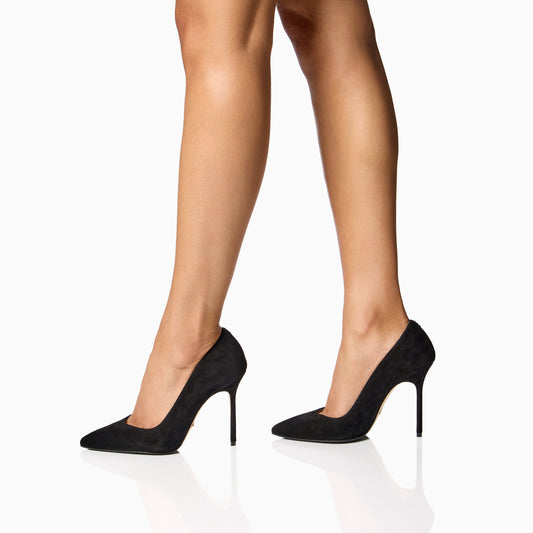 Bestseller
Perfect Pump 100
Regular price $495Regular priceUnit price per$0Sale price $495 -

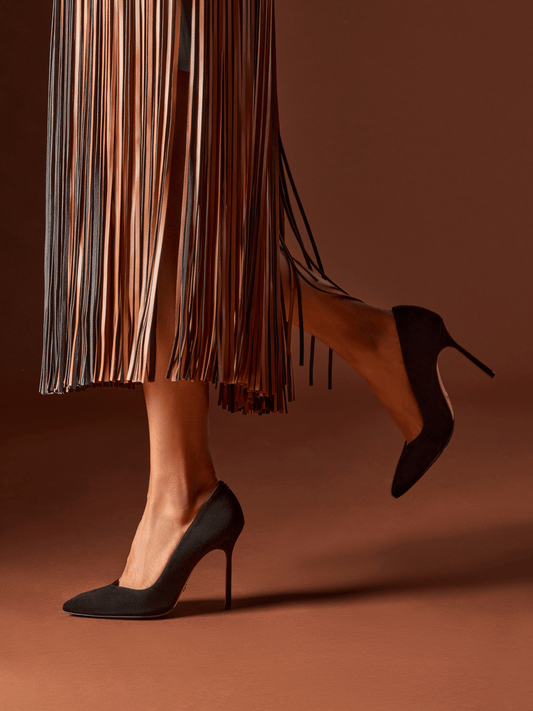 Bestseller
Perfect Pump 85
Regular price $495Regular priceUnit price per$0Sale price $495 -

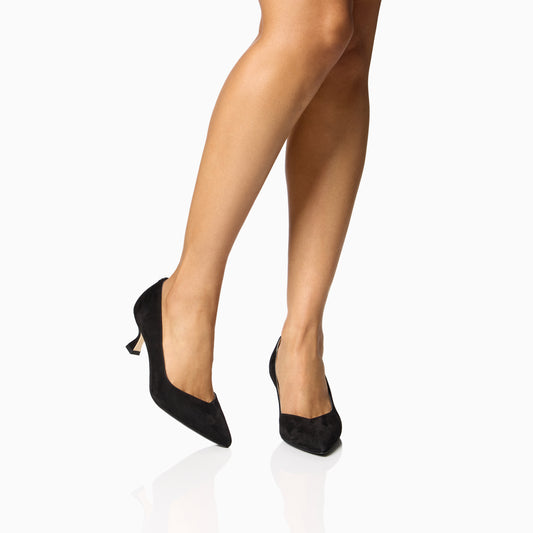 Bestseller
Perfect Kitten Pump 50
Regular price $495Regular priceUnit price per$0Sale price $495 -

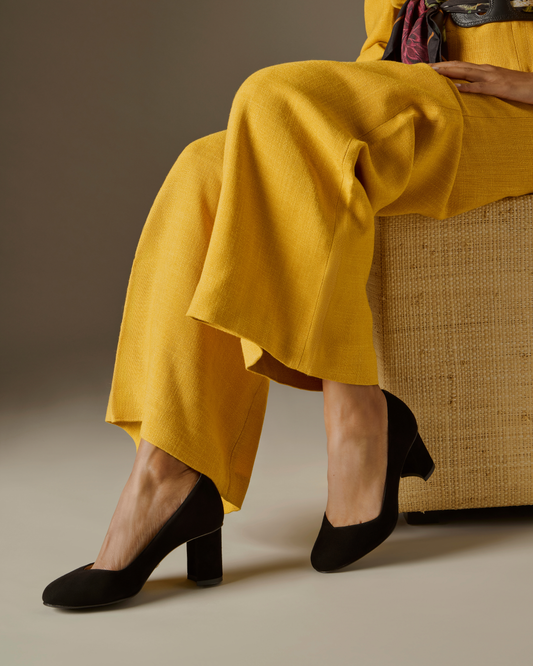 Bestseller
Perfect Round Toe Pump 70
Regular price $495Regular priceUnit price per$0Sale price $495


